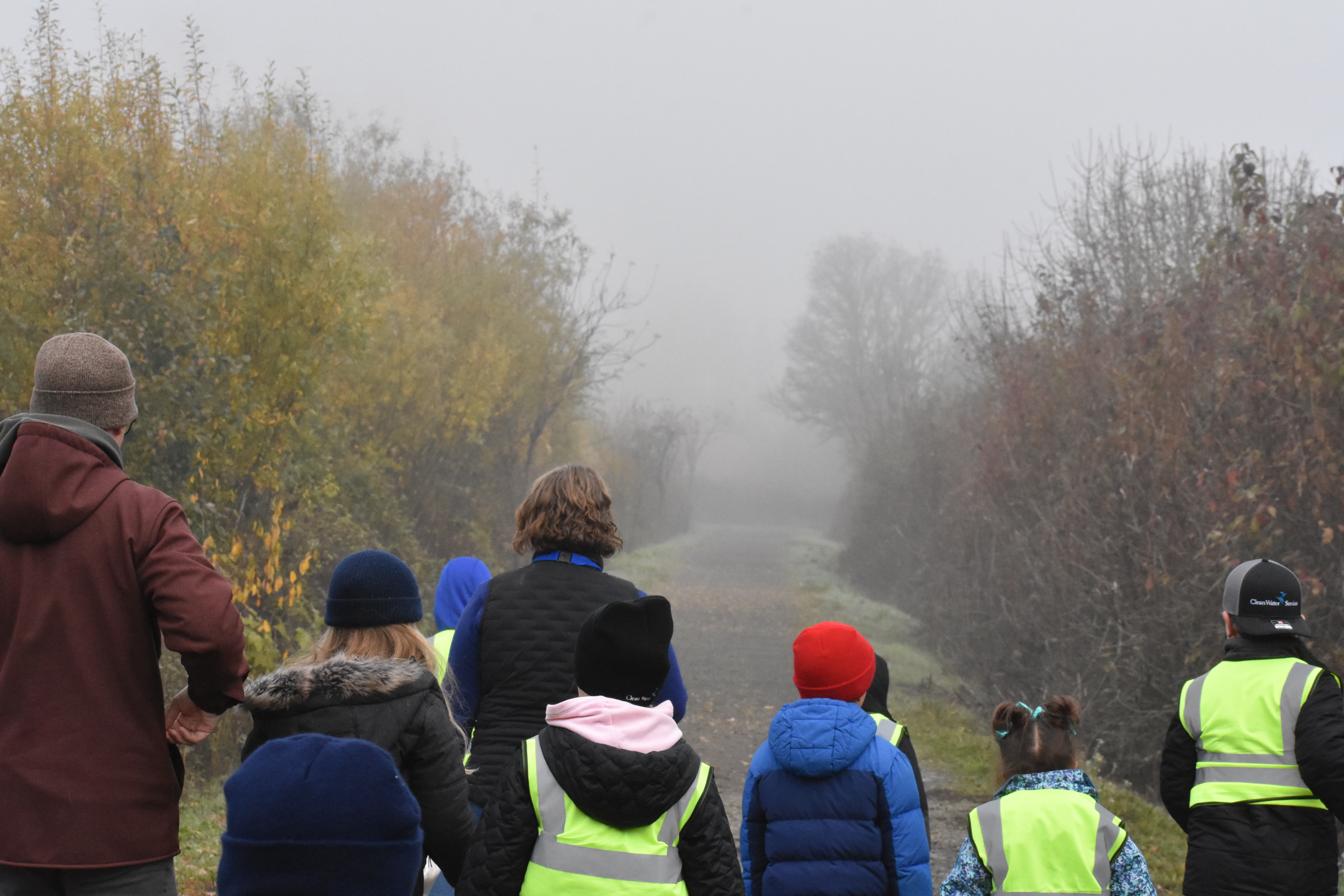
Our work at Clean Water Services is focused on cleaning water to protect the community, but we can’t do it alone. Everyone can help keep water clean or cause pollution that harms it. Our education programs help people understand how they are connected to water, how they impact it, and how they can help protect it.
In this Q&A, Education and Outreach Manager Ely O’Connor and Education and Outreach Specialist Marisol Echenique share their thoughts on why a wastewater and stormwater utility would be so focused on education work, and how they’ve been impacted and inspired along the way.
What excites you most about this work?
EO: The necessity, relevance, and overlooked nature of water gets me excited. There are endless opportunities to uncover connections, apply concepts, and highlight relevance through the built and natural water cycle. One of the many things I love about working with educators is helping them bring real-world examples to their lessons and students. For example, the water resource recovery process includes application of every science discipline (physics, chemistry, biology) and engineering, so we can highlight those processes to help illustrate and address the “When will I ever use that in real life?” question. Water is kind of a big deal
ME: It’s exciting connecting with people about something as relevant as water! I always tell students we tend to take water for granted because we are fortunate enough to have easy access to it, but if we didn’t, it would impact us all. Seeing how much students care about the environment and want to protect it is endearing, too. They are the future, so teaching them ways they can protect our natural resources and wildlife is so rewarding.
How many questions about poop would you say you answer over the course of a year?
EO: A lot. “What happens to the poo?” is such a great starting point for a conversation. We can talk about the pipe system that carries it, the process of separating it from water, how it transforms into fertilizer, and what folks shouldn’t flush. The possibilities are endless! And really, who doesn’t like a good poo joke?
ME: Poop questions are very common when you’re in my line of work. Everyone, from adults, to teens, to preschoolers, wonder about where their poop goes after they flush it and how we clean the water after it’s been used. I had a passionate preschooler once tell me “you have to clean the water really well because if you don’t, the germs from our poop will make the fish sick!”
What’s the most inspiring or surprising thing that’s happened in your time as educators at CWS?
EO: I continue to be inspired by witnessing the moment when someone changes their mind. Showing someone something new or looking at it in a new way can often lead to this. If we can create a sense of wonder about the world and our impact on it, we are being successful.
ME: It’s always inspiring seeing students take action based on what they learned during their time with me. Even small actions, like sharing knowledge with their friends and families, make a difference. Sometimes teachers and other adults share new things they learned, as well. A teacher once said to me, “I had no idea I wasn’t supposed to flush wipes! Why would the package say flushable if they aren’t? Thank you for sharing that because now I won’t flush wipes anymore.”
What have you learned that you wish you’d known when you first got started?
EO: I strive to be a lifelong learner, so I am always learning new teaching techniques, styles, and ways to apply our work to classroom lessons.
ME: I’ve learned to slow down. Sometimes we get so caught up trying to follow a schedule or meet a certain goal that we miss out on opportunities to explore nature and ask meaningful questions.