USGS and CWS partner to learn more about how beavers impact the Tualatin River Watershed
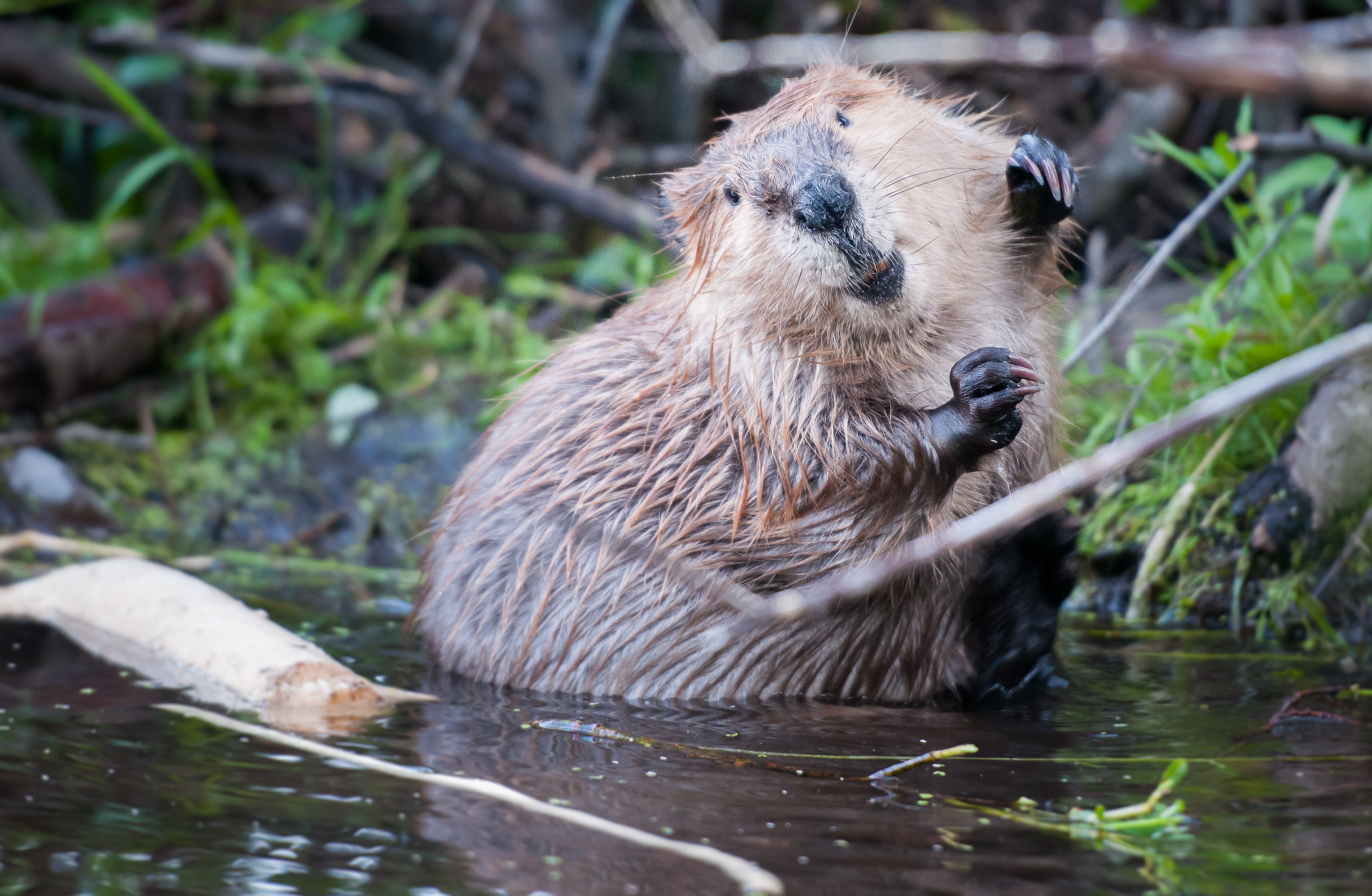
There’s a lot we already know about nature’s engineers. Beavers have iron-enriched teeth, which is what makes them strong enough to gnaw wood (and gives them an orange color). Beavers also have a unique way of communicating — by slapping their tails to draw attention to something or even warn of potential danger.
Beavers are a keystone species, meaning they play a crucial role in the health and diversity of the ecosystems they live in. The dams and lodges that beavers build alter the environment and make new habitats that support other species, both animals and plants. However, they can also present unique challenges.
We partnered with the United States Geological Service (USGS) to conduct a multi-year study of beavers in the urban areas of the Tualatin River Watershed. Many past studies have focused on beavers in rural, forested, and mountainous areas. This new study assessed urban streams that are surrounded and affected by homes, businesses, and critical infrastructure. These streams are also very narrow, flowing over sand, silt, and clay, and often experiencing large volumes of stormwater runoff during rain events.
What did we learn?
- Where are beavers? Creeks! We found that local beavers have built more dams along smaller and slower creeks than on the Tualatin River. Overall, beavers tend to build dams where there is suitable vegetation for food and dam construction.
- Could beavers build more dams? Yes! Most of the watershed can support more dams than are currently present. However, fast-moving water, lack of food, human intervention, and natural predators may be deterring beavers from building more. One solution is to focus on restoring streamside vegetation to provide more resources for beavers to build.
- How do beavers affect water quality? Dams slow flowing water and create ponds, which can change water temperature, oxygen levels, and other conditions that affect different species in different ways. Pond water has more time to interact with the sediment and air compared to flowing water. Deep ponded areas may have bottom-water that is cooler, but not as oxygenated. Shallow ponded areas without adequate shade can be warm and too oxygenated. Planting shade trees can help keep the water cool, even downstream of beaver dams, where trees can effectively shade the water.
- How do beavers affect water clarity? Suspended sediment refers to the fine particles of clay, silt, and sand carried from the river or creek bed. This is a natural phenomenon; however, urban streams often have higher volumes of suspended sediment due to bank erosion and runoff, which can impact the landscape and habitat. Beaver dams slow water flow and allow sediment to settle, improving water clarity and providing stability downstream.
- Can beaver dams slow storm surges? Sometimes, yes. Dams can slow surging water from smaller rain events, but they typically do not slow down water during moderate or large storms. However, during smaller rain events, dams can help keep water in streams and floodplains, which enhances floodplain connectivity. Dams also help create more diverse stream conditions when it’s not raining.
- Cumulative Effects: Findings from this study offer insights into the effects of beaver dams in larger urban streams. More work is needed to understand impacts in smaller streams, or the cumulative effects of many dams along the stream network in the Tualatin Basin.
What are we doing with this information?
Beavers are essential to the health of the watershed but can also be a challenge if humans do not understand how to live and work around them. As we continue to plan future projects to support the growing and changing community, we are better equipped to make thoughtful and informed decisions about how and where we conduct our work, saving time and money.
By understanding how beavers shape our environment, we can make smarter choices that support both thriving ecosystems and resilient communities. Together, we can turn what we’ve learned into action that benefits people, wildlife, and the river we all depend on.
Did you know?
The name “Beaverton” came from the Indigenous Atfalati peoples. They named their village along the Fanno and Beaverton Creeks “Chakeipi,” which means “Place of the Beaver.” Early white settlers called this place “Beaver Dam,” which eventually became Beaverton.