The pipes, pump stations, stormwater systems, and treatment facilities that protect the health of all of us who live and work in Washington County are able to serve our growing communities because people working at Clean Water Services (CWS), the County, and our 12 partner cities have been planning for decades.
CWS staff look at population growth, earthquake risk assessments, historical water flow data, climate science, and evolving environmental regulations. They calculate how to avoid large rate spikes by making small, regular rate adjustments and by spreading costs over the useful lifespan of infrastructure so current ratepayers don’t foot the entire bill for building or upgrading resources that will also benefit the people and industries not yet here.
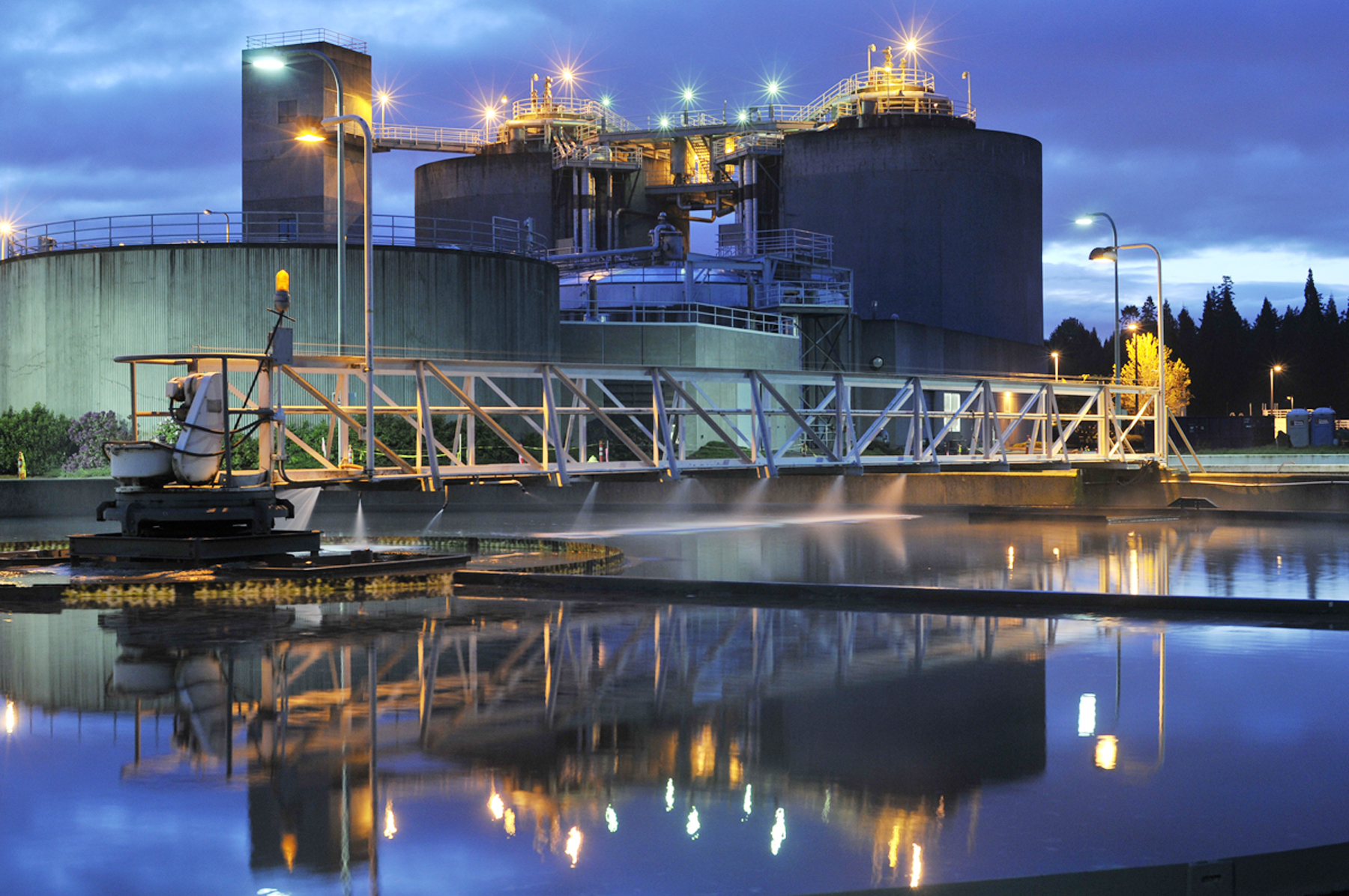
The newly completed Primary Clarifier 4 at the Rock Creek Water Resource Recovery Facility is now helping to serve the people living in Hillsboro, Aloha, unincorporated Washington County, and portions of Beaverton thanks to a facilities plan that just turned 11 years old. The systems that will meet our needs 20 years from now will arrive thanks to planning being done today.
Essential Infrastructure
Primary clarifiers are among the early stops for wastewater as it goes through an extensive treatment process. The used water is pumped into large tanks where anything denser than water — like human waste and toilet paper — settles toward the bottom and anything lighter than water — like fat, oils, and grease — floats. Rotating arms push the solids to pumps that send materials to our solids handling facilities for resource recovery. This is one of many times solids and liquids are separated during the treatment process.
All water coming into the Rock Creek facility must go through primary clarifiers. Flows increase during wet weather because stormwater can infiltrate wastewater pipes, creating a bottleneck at the primary clarifiers. That combination of wastewater and stormwater will continue to increase over time due to population growth and more intense periods of heavy rain as our climate changes.
Did You Know?
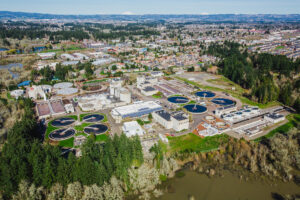
After water is used by everyone who lives and works in urban Washington County, it’s routed to one of our four water resource recovery facilities — Durham, Rock Creek, Hillsboro, or Forest Grove. Then we start the job of recovering natural resources and cleaning the used water before returning it to the Tualatin River. Explore our Virtual Treatment Process to learn more.
Additional capacity to handle wet weather wastewater flows at Rock Creek was among the future needs addressed in CWS’ 2014 West Basin Facilities Plan. In 2014, flow projections showed Rock Creek would need to bring another primary clarifier online by 2025 — and so we have, with Primary Clarifier 4 increasing wet weather capacity by 30 percent. Greater earthquake resilience and expanded RV waste discharge stations were also among the upgrades included in this project.
Current flow projections estimate we’ll need to build Primary Clarifier 5 at Rock Creek by 2052. This addition is part of a new West Basin Master Plan, which serves as a 20-year roadmap for upgrading and expanding treatment and conveyance infrastructure while adding capacity to serve growth and industry, maintaining flexibility for changes to environmental regulations, addressing infrastructure age and condition, and building seismic and climate resilience.
The plan — covering unincorporated Washington County and the cities of Beaverton, Hillsboro, Forest Grove, Cornelius, North Plains, Gaston, and Banks — will go to the CWS Board of Directors for adoption this year. The Board adopted an East Basin Master Plan — serving Tigard, Tualatin, Sherwood, King City, Durham, and portions of Beaverton, Portland, and Lake Oswego — in 2022.
All of the people, plants, wildlife, businesses, and industries in Washington County depend on the infrastructure addressed in these plans, particularly because we are in one of the nation’s most challenging watersheds. Visit our Strategic Watershed Assessment & Planning page to learn more about how we apply scientific knowledge, innovation, and long-term vision to improve watershed health for community benefit.